You’ve picked up a Vitamin C serum, flipped it over, and squinted at the ingredient list — only to find a word you can’t pronounce sitting in the third position. Is that Vitamin C? A cheaper substitute? Something better? If you’ve spent any time in the serum aisle, you already know that Vitamin C is one of the most researched brightening and antioxidant ingredients in skincare. What you may not know is that “Vitamin C serum” is an umbrella term covering at least half a dozen distinct chemical forms — each with a different stability profile, penetration rate, and real-world efficacy track record. The form that shows up on the INCI list (the standardized ingredient name required on every cosmetic sold in the US and EU) is the difference between a serum that’s working and one that oxidized before you opened it. This guide breaks down each major form, explains the chemistry in plain terms, and gives you a clear framework for matching the right derivative to your skin concern, your formulation preferences, and your budget.
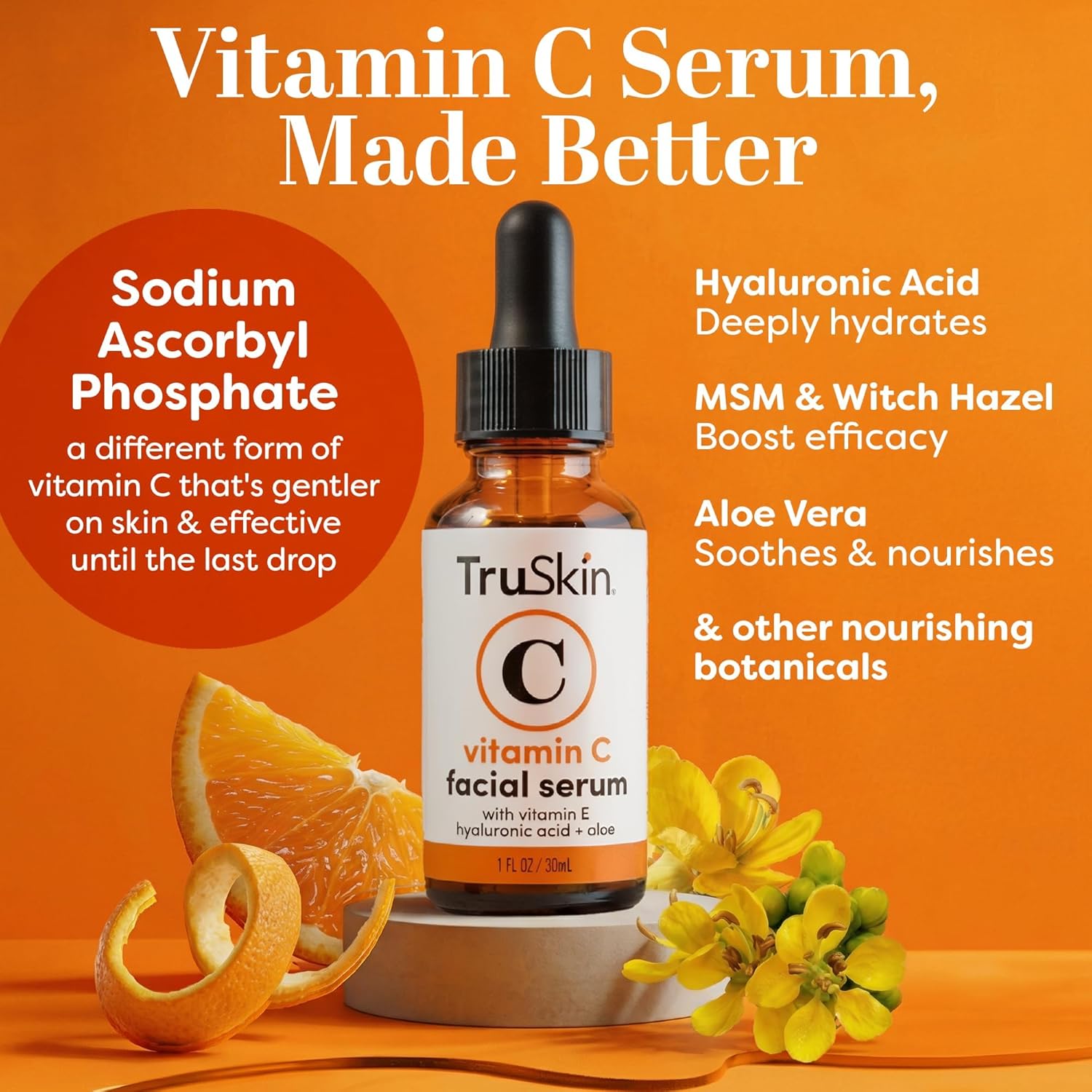
| EDITOR'S PICKNaked & Thriving Illuminate BC+… | Mid-tier[TruSkin Vitamin C Serum for Fac…](https://www.amazon.com/dp/B01EKUBU5Y?tag=greenflower20-20) | Budget pick[Tree of Life Vitamin C Serum Fo…](https://www.amazon.com/dp/B00S2G786S?tag=greenflower20-20) | |
|---|---|---|---|
| Key ingredients | Hyaluronic Acid, Bakuchiol | Hyaluronic Acid, Vitamin E | Vitamin E |
| Size | 1.0 fl oz | — | 1 fl oz |
| Vegan | ✓ | — | — |
| Target concern | Mature skin, spots, wrinkles | Dark spots, fine lines, wrinkles | Dark spots, age spots |
| Price | $76.00 | $34.99 | $9.99 |
| See on Amazon → | See on Amazon → | See on Amazon → |
Why Vitamin C Is So Hard to Keep Stable
L-ascorbic acid — the pure, bioavailable form of Vitamin C — is chemically a reducing agent, which means it donates electrons readily. That’s exactly what makes it useful in skin: it neutralizes free radicals (unstable molecules that degrade collagen and cause hyperpigmentation), inhibits the enzyme tyrosinase (which drives melanin overproduction), and supports collagen synthesis at the cellular level, per Pullar et al.’s 2017 review in Nutrients.
The problem is that the same reactivity that makes L-ascorbic acid effective also makes it self-destructive. Exposure to air, heat, light, and water causes it to oxidize into dehydroascorbic acid and eventually erythrulose — forms that are largely inactive for skin purposes and that turn the serum an orange or brown color. Formulators have two options: engineer a delivery system that keeps pure L-ascorbic acid stable (low pH, anhydrous base, opaque airless packaging) or swap in a derivative that’s inherently more stable and converts to L-ascorbic acid after penetrating the skin. Both strategies are legitimate. The tradeoff is that derivatives sacrifice some potency and conversion efficiency in exchange for shelf life and tolerability.
Here’s the practical consequence: two serums both marketed as “Vitamin C” can have fundamentally different activity windows, penetration profiles, and effective concentrations at the skin surface. Reading the INCI name is the only reliable way to know which you’re buying.
The Major Forms, Ranked by Evidence Strength
L-Ascorbic Acid (LAA)
INCI name: Ascorbic acid
This is the gold standard — the only form with a deep clinical evidence base for photoprotection, collagen induction, and brightening. Pinnell et al.’s foundational 2001 study in Dermatologic Surgery established that L-ascorbic acid at 15–20% concentration in a pH 2.5–3.5 vehicle achieved significant percutaneous absorption and measurable photoprotection in vivo. INCIDecoder’s ingredient profile confirms it rates among the highest-evidence actives in the database.
The catch: that low pH is what keeps it stable in the bottle — and it’s also what causes the tingling, redness, and barrier disruption some users experience. Formulators who push LAA above 20% rarely improve efficacy (absorption plateaus) and often increase irritation risk. Any LAA serum above pH 3.5 is likely to oxidize before it penetrates effectively.
Formulation red flags: a clear glass dropper bottle with no UV protection, a dropper that exposes the serum to air with each use, a watery formula without a chelating agent (like EDTA) to deactivate metal ions that accelerate oxidation. If the serum has turned yellow-orange, that’s not a sign of “natural color” — it’s oxidation.
Best for: users with oily to normal skin who can tolerate low pH, pursuing evidence-backed brightening or sun-damage correction.
Ascorbyl Glucoside
INCI name: Ascorbyl glucoside
A glucose-bonded derivative that’s significantly more stable than LAA across a wider pH range. Enzymes in the skin (specifically glucosidases) cleave the glucose molecule to release free ascorbic acid after penetration. The conversion is real, but partial — not all ascorbyl glucoside converts, and conversion efficiency varies by skin enzyme activity.
EWG’s Skin Deep database rates it as low-hazard with solid antioxidant data. Byrdie’s 2025 roundup of dermatologist-recommended Vitamin C serums includes several ascorbyl glucoside formulations as top picks for sensitive skin types, noting that the higher pH tolerance (stable up to ~pH 7) makes it stackable with other actives without the barrier disruption risk.
Best for: sensitive, reactive, or rosacea-prone skin; users who want to layer Vitamin C under retinol or niacinamide without triggering interaction issues.
Tetrahexyldecyl Ascorbate (THD Ascorbate)
INCI name: Tetrahexyldecyl ascorbate
An oil-soluble ester of Vitamin C — the most lipophilic (fat-loving) of the major derivatives. Because it’s oil-soluble, it integrates into the skin’s lipid matrix and penetrates deeper into the dermis than water-soluble forms. Paula’s Choice’s Skincare Education resource notes that THD ascorbate shows promising research on collagen synthesis and melanin inhibition, and that its oil solubility gives it a distinct advantage in delivery to deeper skin layers.
It’s also highly stable — not susceptible to the water-triggered oxidation that plagues LAA. You’ll find it in anhydrous (water-free) or low-water luxury formulations, including several options in the $80–$180 range, where it’s often paired with plant-derived oils, ceramides, or biofermented actives.
The tradeoff: the conversion pathway to free ascorbic acid at the intracellular level is less studied than LAA’s, and the clinical evidence base, while growing, is thinner than the pure form. You’re trading documented surface efficacy for superior penetration and tolerability.
Best for: dry, mature, or lipid-depleted skin; users who prefer oil-serum or facial-oil formats; formulations targeting deeper dermal collagen support rather than surface brightening.
Sodium Ascorbyl Phosphate (SAP)
INCI name: Sodium ascorbyl phosphate
A salt form of Vitamin C stabilized with a phosphate group. Phosphatases in the skin convert it to active ascorbic acid. SAP is water-soluble, stable at neutral pH, and has a documented secondary benefit: published research suggests it may have antimicrobial properties relevant to acne-prone skin, cited in multiple dermatology reviews on topical antioxidants.
It’s frequently the form of choice in drugstore and mid-tier formulations (roughly $18–$55) where cost-per-use and accessibility are priorities. The conversion efficiency is moderate — better than some esters, but formulators typically need concentrations of 5–10%+ to deliver meaningful free ascorbic acid.
Best for: oily, acne-prone skin; users looking for affordable Vitamin C entry points; anyone who finds LAA too irritating but wants a form with decent evidence depth.
Ascorbyl Tetraisopalmitate and Magnesium Ascorbyl Phosphate
Two additional derivatives worth naming briefly: Ascorbyl tetraisopalmitate (another oil-soluble ester, structurally similar to THD ascorbate, with comparable stability and penetration benefits) and Magnesium ascorbyl phosphate (MAP), a water-soluble, gentle derivative often used in formulations targeting hyperpigmentation with a lower irritation ceiling. INCIDecoder’s entries for both rate them positively for stability, with the caveat that MAP requires higher concentrations than LAA to achieve equivalent melanin-suppression effects.
By the Numbers: Stability and Potency at a Glance
| Form | Water-soluble | Stable at neutral pH | Evidence depth | Irritation risk |
|---|---|---|---|---|
| L-Ascorbic Acid | Yes | No (needs pH ≤3.5) | Highest | Moderate–High |
| Ascorbyl Glucoside | Yes | Yes | Moderate | Low |
| THD Ascorbate | No (oil-soluble) | Yes | Moderate | Very Low |
| Sodium Ascorbyl Phosphate | Yes | Yes | Moderate | Low |
| Magnesium Ascorbyl Phosphate | Yes | Yes | Moderate | Very Low |
Packaging Is Part of the Formula
If you’re ingredient-literate enough to read INCI names, you should be equally critical of packaging — because a well-formulated LAA serum in a clear dropper bottle is a liability. The research consensus, reflected in formulator commentary across Byrdie and Allure’s ingredient-focused coverage, consistently points to three packaging requirements for LAA stability: opaque or UV-blocking container, airless pump or inert-gas-sealed dropper, and a small enough bottle size to ensure the product is used before oxygen exposure degrades the active.
Derivatives like THD ascorbate and ascorbyl glucoside are forgiving — you’ll find them in open-pump formats without the same degradation risk. But if a brand is charging $85+ for a pure L-ascorbic acid serum in packaging that doesn’t protect it, that’s a red flag worth noting before purchase.
The If/Then Decision Framework
You’ve done the INCI read. Here’s how to route your decision:
If your primary goal is evidence-backed brightening and you can tolerate low-pH formulas: look for L-ascorbic acid at 10–20%, pH confirmed at or below 3.5, in opaque airless packaging. This is the highest-evidence path. Budget for a bottle you’ll finish within 2–3 months.
If you have sensitive or reactive skin, or you need to layer with other actives (retinol, AHAs, niacinamide): ascorbyl glucoside or sodium ascorbyl phosphate will give you meaningful Vitamin C activity without the pH conflict. Mid-tier options in the $35–$70 range typically use these forms effectively.
If you’re targeting mature, dry, or lipid-depleted skin — or you want a serum that integrates into an oil-rich routine: THD ascorbate or ascorbyl tetraisopalmitate in an oil-serum or facial oil base. Expect to spend $65–$150 for formulations where this derivative is paired with complementary actives rather than used as a label claim.
If you’re recommending to clients in a practice setting: consider that LAA’s irritation ceiling limits it for many skin types, and the stability demand is high. Ascorbyl glucoside and SAP formulations are easier to retail consistently because they’re forgiving to store, stack predictably with other treatment actives, and carry a lower incidence of client complaints. The tradeoff is a slightly longer timeline to visible results.
If the serum has turned amber, orange, or brown in the bottle: regardless of the form listed, oxidation has occurred. The antioxidant activity is degraded. This is a discard, not a discount.
The Vitamin C category is crowded precisely because “Vitamin C” functions as a trust signal in skincare marketing — it’s one of the most shopped ingredient terms, per Allure’s annual ingredient trend reporting. That makes INCI literacy your primary filter. The form determines the stability window, the delivery pathway, the pH compatibility, and ultimately whether the active you paid for is still active when it reaches your skin. Read the list, match the derivative to your skin profile, and check the packaging before the price tag.
This article contains affiliate links. NaturalMoisture.com may earn a commission on purchases made through links in this article, at no additional cost to you. Affiliate relationships do not influence product selection or editorial opinion.