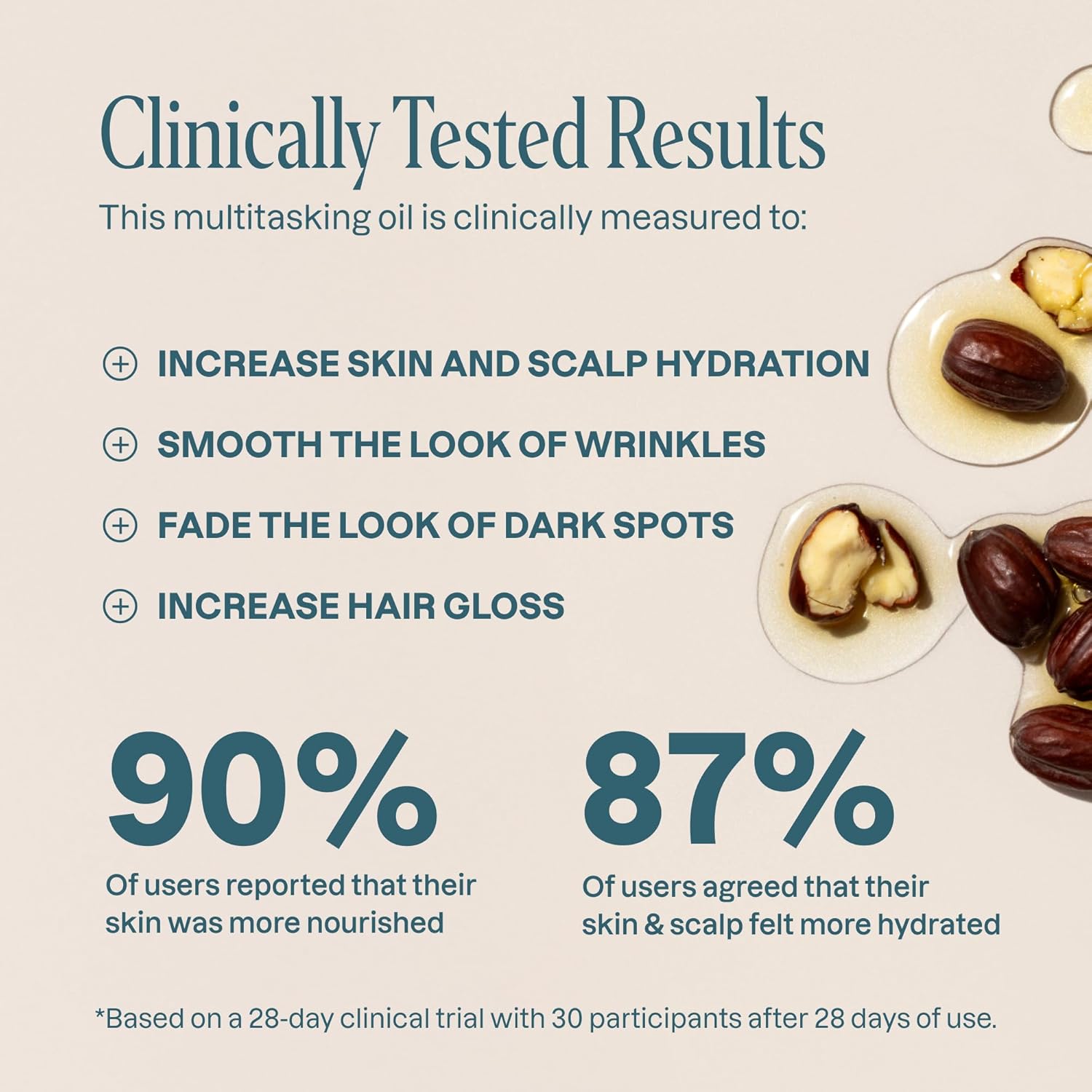
If you’ve ever reached for a single oil that could work as a standalone moisturizer, a serum booster, or a base for DIY blending — and come across the name jojoba (pronounced ho-HO-bah) — you’re in good company. Jojoba oil is actually a liquid wax ester, not a triglyceride oil like most plant oils. That distinction matters: its molecular structure closely mirrors the sebum (the skin’s own natural oil) our skin produces, which is why formulators and estheticians treat it as one of the most skin-compatible carrier oils available. A carrier oil is simply a plant-derived oil used to dilute actives, deliver ingredients, or function as a moisturizer on its own. What you’re going to find in this article: how cold-pressing (the extraction method that preserves the most beneficial compounds) affects quality, how to read a label to tell the good stuff from filler, and the cost-per-use math that determines whether a $12 bottle or a $45 bottle is actually the better deal for your practice or your bathroom shelf.
| EDITOR'S PICK[Trilogy Certified Organic Roseh…](https://www.amazon.com/dp/B001NJNV12?tag=greenflower20-20) | Mid-tier[Cliganic Organic Jojoba Oil](https://www.amazon.com/dp/B07H4QNW4H?tag=greenflower20-20) | Budget pick[Leven Rose Jojoba Oil Organic](https://www.amazon.com/dp/B00GJX58PE?tag=greenflower20-20) | |
|---|---|---|---|
| Oil type | Rosehip | Jojoba | Jojoba |
| Certifications | USDA Organic, Certified Organic | Organic | Organic |
| Size | — | 4 fl oz | 4 fl oz |
| Hexane free | — | ✓ | — |
| Price | $31.79 | $9.98 | $9.97 |
| See on Amazon → | See on Amazon → | See on Amazon → |
Why Sourcing Method Changes Everything
This is the part most product pages skip, and it’s where intermediate buyers get the biggest edge.
Jojoba seed oil — listed on INCI (International Nomenclature of Cosmetic Ingredients, the standardized naming system for cosmetic components) as Simmondsia chinensis Seed Oil — can be extracted three ways:
- Cold-pressed / expeller-pressed: Seeds are mechanically pressed at controlled low temperatures (typically under 120°F / 49°C). This preserves tocopherols (vitamin E), fatty acid profiles, and the iodine value that signals wax ester purity. No solvents involved.
- Solvent-extracted: Hexane or similar solvents strip the oil from the meal faster and at higher yield, but residual solvent content and degraded tocopherol levels are persistent quality concerns. Per INCIDecoder’s entry on Simmondsia chinensis Seed Oil, solvent-extracted batches consistently show lower antioxidant retention.
- Refined / deodorized: Takes a cold-pressed or solvent-extracted oil and strips color, odor, and some active compounds through heat and bleaching. You get a clear, odorless oil — but you lose some of the very things that make jojoba useful as a moisturizer base.
The practitioner-level call here: If you’re recommending jojoba as a facial moisturizer base or retailing it to clients with reactive or sensitized skin, cold-pressed, unrefined is the specification to insist on. The International Jojoba Export Council’s quality standards documentation identifies golden color and a faint nutty aroma as markers of minimally processed, high-wax-ester-integrity oil. Clear, odorless jojoba is not inherently bad — it’s appropriate for some applications (less risk of cross-reactivity for fragrance-sensitive clients) — but it signals processing that has already compromised part of the ingredient’s native profile.
Allure’s ingredient education coverage on jojoba notes that the oil’s similarity to human sebum makes it particularly well-suited for combination and oily skin types, because it can signal the skin to reduce its own sebum overproduction — a claim that, while not yet confirmed by large-scale RCTs (randomized controlled trials), is consistent with the biochemistry of wax ester interaction. EWG Skin Deep gives Simmondsia chinensis Seed Oil a rating of 1 (the lowest hazard score on their 1–10 scale), which is useful context when you’re fielding client questions about clean-ingredient safety.
Reading the Label: What the Bottle Actually Tells You
Here’s the decision-frame matrix for evaluating a jojoba product on the shelf or a supplier page:
| Label Signal | What It Means | Practitioner Action |
|---|---|---|
| ”Cold-pressed” + golden color | Minimal processing, intact wax esters | Preferred for facial use |
| ”Expeller-pressed” | Mechanical, but may run hotter | Acceptable; ask supplier for temp spec |
| ”Refined” or colorless + odorless | Heat/chemical processing; some active loss | Fine for body blending, not ideal for sensitive facial |
| No extraction method listed | Likely solvent-extracted or heavily refined | Flag; ask for SDS (Safety Data Sheet) |
| Organic certification (USDA, Ecocert) | Pesticide audit trail exists | Worth the small premium for retail-facing products |
| Country of origin listed | Supply chain transparency | Prefer stated origin; Argentina, Peru, and Arizona/Sonora corridor are main growing regions |
The iodine value shortcut: Genuine high-quality jojoba has an iodine value of approximately 80–85 (a measure of unsaturation in the wax ester chain). Suppliers who publish this number are showing their work. Suppliers who don’t have a reason not to.
Credo Beauty’s ingredient glossary on carrier oils flags a related issue: “jojoba oil” labeled products are occasionally diluted with sunflower or safflower oil without disclosure, particularly at the budget end of the bulk market. The tell is price that significantly undercuts the commodity average ($8–$14/100ml for genuine cold-pressed as of mid-2026) combined with absent sourcing documentation. If a supplier is selling 4 oz of “cold-pressed organic jojoba” for $4.99, ask for the Certificate of Analysis (CoA) before placing a volume order.
The Cost-Per-Use Math: Where the Real Decision Lives
This is where the practitioner advantage compounds. Sticker price on jojoba bottles ranges from about $10 for a 4 oz mass-market option to $45+ for small-batch, certified-organic, single-origin 4 oz bottles. The instinct is to call the $10 bottle a deal. The math usually disagrees.
By the numbers — facial moisturizer use case (1–2 drops per application, twice daily):
- A 4 oz (118 ml) bottle contains approximately 2,360 drops
- At 2 drops per application, twice daily = 4 drops/day
- 2,360 ÷ 4 = 590 days of use from one 4 oz bottle
- Cost-per-day at $12 = $0.02/day
- Cost-per-day at $45 = $0.076/day
The delta between a $12 bottle and a $45 bottle, annualized, is approximately $20 per year for a daily facial-oil user. Framed that way, the cold-pressed organic upgrade costs less than one mid-tier face wash per year. For your own use or for client recommendations, this reframe usually ends the “but it’s so much more expensive” conversation.
For body-use applications (palms, 5–10 drops per application), the math shifts:
- 5–7 drops per use, once daily = ~340–470 uses per 4 oz bottle
- Still comfortably under $0.10/use even at premium pricing
The real cost question isn’t bottle price — it’s adulteration risk. A diluted or solvent-extracted bottle at $10 that delivers inferior skin-compatibility may trigger product switching, client feedback issues, or (in a professional context) a reformulation cycle. The quality premium on verifiable cold-pressed sourcing is, by cost-per-use math, nearly negligible. Buy the better source.
Formulation Roles: Where Jojoba Earns Its Place (and Where It Doesn’t)
Byrdie’s roundup of best face oils consistently positions jojoba alongside squalane (another skin-mimetic, typically derived from sugarcane or olive) as the two “universal-compatibility” carrier oils — meaning they’re unlikely to provoke comedogenic (pore-clogging) or sensitizing reactions across skin types. This is the right framing for practitioner recommendations: jojoba is a base-layer oil, not a treatment oil.
Where jojoba performs well:
- Standalone facial moisturizer for oily/combination/normal skin: Its non-greasy, fast-absorbing texture (a function of its wax ester structure, which doesn’t compete with skin lipids the way triglyceride oils do) makes it an effective single-ingredient moisturizer, particularly in humid climates or during warmer months.
- Carrier for actives: As a carrier for vitamin C derivatives, bakuchiol, or essential oil blends (at appropriate dilution rates), jojoba’s stability (very long shelf life — typically 2+ years unopened, unlike rosehip or sea buckthorn which can go rancid in months) makes it a reliable base.
- Makeup-removal step: Its wax ester structure dissolves sebum and cosmetic waxes effectively without disrupting the skin barrier, making it useful in double-cleansing protocols before a water-based cleanser.
- Cuticle, scalp, and beard applications: Non-reactive profile makes it low-risk for these uses.
Where jojoba underperforms:
- Very dry or barrier-compromised skin (eczema flares, post-procedure skin): Skin in a compromised state typically needs occlusive agents (petrolatum, lanolin, dimethicone) or ceramide-rich moisturizers that actively repair the barrier. Jojoba alone won’t provide enough occlusion. In these cases, jojoba works better as a layer under a heavier balm or cream, not as a standalone.
- Anti-aging actives delivery: If your client or practice is focused on retinoid delivery or peptide-driven protocols, more structured vehicle emulsions outperform a straight carrier oil. Jojoba can coexist in these routines but shouldn’t replace formulated serums.
The Sourcing Tier Decision Rule
Here’s the explicit if-X-then-Y framework for purchasing decisions:
If you’re recommending to a client with reactive, sensitized, or rosacea-adjacent skin → cold-pressed, unrefined, organic certified, with a published CoA. Don’t compromise here. The cost differential is small; the risk of a reaction from a solvent-processed batch is not.
If you’re sourcing for a DIY or private-label blending operation → cold-pressed unrefined for facial formulations; expeller-pressed refined is acceptable for body blends where texture and allergen risk are the primary concerns.
If you’re evaluating retail jojoba oils for client recommendation (not bulk sourcing) → look for products where the brand publishes extraction method, country of origin, and ideally third-party organic certification. Brands that surface on Byrdie and Allure’s ingredient-focused roundups, and that carry EWG Verified status, have passed a baseline transparency audit that’s useful social proof for clients asking “is this clean?”
If the client’s primary criterion is price → the cost-per-use math already makes even a $35–$45 cold-pressed 4 oz bottle an easy yes. Show them the math. The conversation usually ends there.
If you’re buying for gifting or premium retail positioning → jojoba is rarely the hero product in that context (it lacks the narrative specificity of, say, a single-origin Moroccan argan or a small-batch sea buckthorn blend), but it earns its place in curated oil-blend gift sets where its role as the stable, skin-compatible carrier base is worth noting on the insert card.
Jojoba is one of the few carrier oils that genuinely rewards the sourcing homework. The gap between a commodity bottle and a properly cold-pressed, single-origin, certified-organic product is narrow in dollars per day and wide in formulation integrity. For practitioners building client protocols or product recommendations around ingredient transparency — which is the expectation in this market — that gap is the whole point. Buy to spec, show the math, and the recommendation makes itself.
Disclosure: This article contains affiliate links. If you purchase through a link on this page, we may earn a commission at no additional cost to you. Our editorial recommendations are based on ingredient research and published sourcing standards, not commercial arrangements.