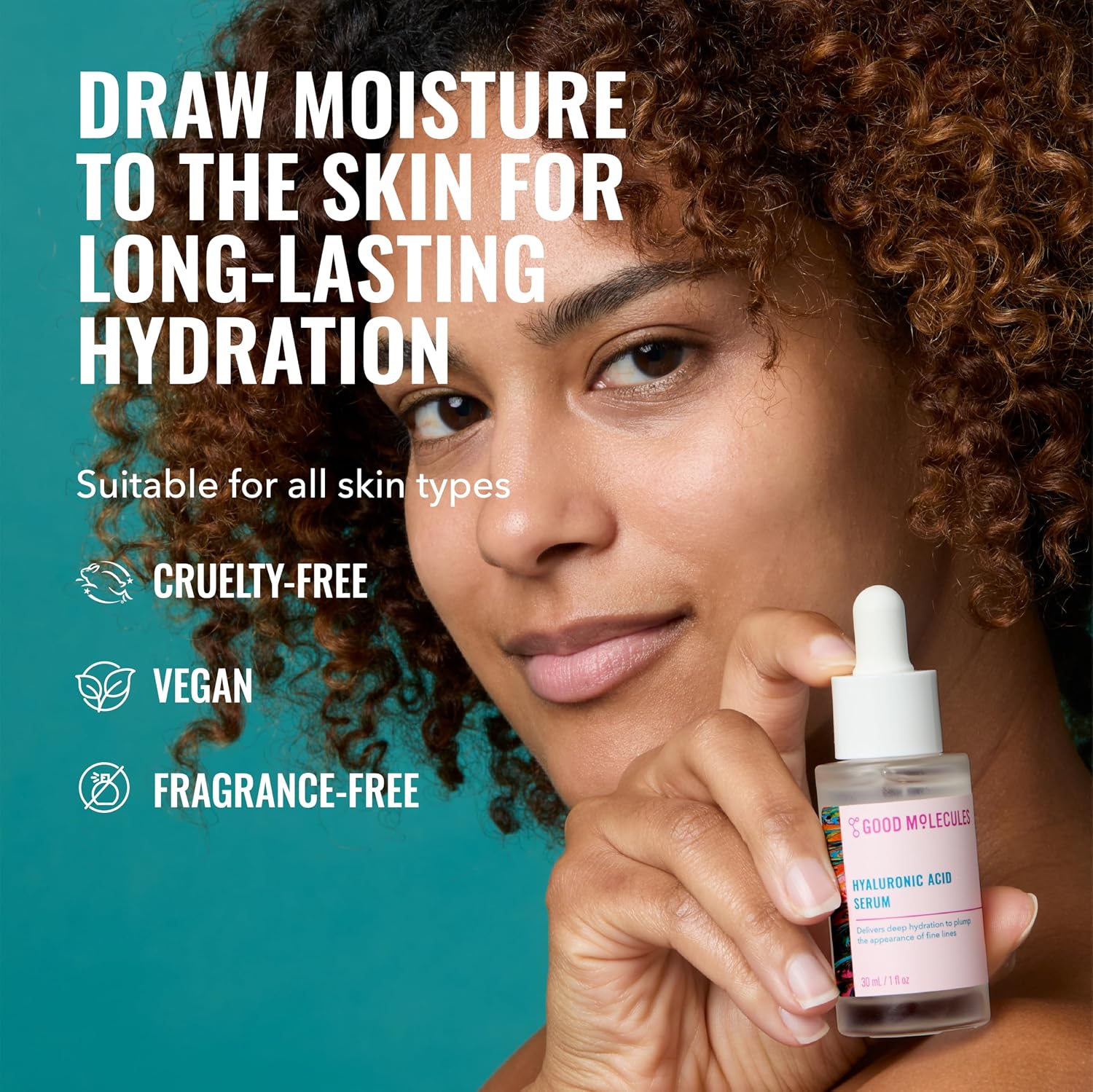
Have you ever added a hyaluronic acid serum to your routine, expected that plump, glass-skin result everyone talks about — and wound up with skin that felt tighter than before? You’re not imagining it. Hyaluronic acid (HA for short) is a humectant, meaning it works by drawing water molecules toward itself — ideally from your moisturizer and the air around you. But when it’s applied in the wrong order, or left unsealed on dry skin, it can pull moisture out of your dermis instead. The layering sequence isn’t a marketing myth or a brand preference; it’s basic chemistry. This guide walks you through the why, the when, and the tradeoffs between different HA formats so you can make the sequence work regardless of what’s already sitting on your shelf.
Why Order Actually Matters (And What Goes Wrong When It Doesn’t)
Let’s name the problem explicitly: hyaluronic acid is a hygroscopic molecule — it’s structurally hungry for water. Depending on molecular weight (the size of the HA chain), it either sits on the skin’s surface and holds moisture there, or it partially penetrates the upper layers of the epidermis and binds water closer to living skin cells.
Byrdie’s overview of hyaluronic acid notes that high-molecular-weight HA (typically anything above 1,000 kDa, or kilodaltons, a measure of molecular size) sits on top of skin and forms a film. Low-molecular-weight HA — often listed on INCI labels as hydrolyzed hyaluronic acid or sodium hyaluronate with a smaller chain length — penetrates more readily. This matters for layering because both types need a water source on application and a physical seal afterward to actually plump rather than parch.
The failure mode most people hit: they apply HA serum over dry or slightly dehydrated skin, skip a moisturizer, or apply the moisturizer too long after the serum has dried. Vogue’s reporting on the “dehydrating HA” phenomenon confirms the mechanism — in low-humidity environments especially, unsealed HA will draw transepidermal water (water already present in your skin tissue) to equalize its concentration, effectively drying you out from within.
The takeaway before we go further: HA serum is not a standalone treatment. It’s a step in a system. If you’re experiencing tightness or a paradoxical dry feeling from an HA product, the formula itself is almost never the culprit — the sequence is.
The Correct Layering Sequence, With the Tradeoffs Named
Here is the canonical order, and the rationale behind each position:
1. Cleanser 2. Toner or essence (optional — hydrating toners set a water base) 3. Hyaluronic acid serum — applied to damp skin 4. Any additional actives (vitamin C, niacinamide, peptide serums) — if thinner in texture 5. Moisturizer — applied while HA is still slightly tacky, within 60 seconds 6. Facial oil or occlusives (if used) — last 7. SPF (morning only) — absolute final step
The critical variable is step 3: damp, not wet, not dry. Healthline’s overview of hyaluronic acid for skin recommends applying immediately after cleansing while skin retains some moisture, or misting lightly before applying. This gives the HA molecule a water reservoir to interact with before it starts looking elsewhere.
Step 5’s 60-second window is worth internalizing. Dermstore’s editorial on serum layering flags this as the most commonly skipped instruction — users apply their serum, check their phone, and by the time they reach for moisturizer the HA has already begun evaporating water from their skin surface. If your routine takes longer between steps, a hydrating toner before HA (step 2) buys you additional buffer.
The tradeoff if you’re using multiple actives: Some practitioners want vitamin C (ascorbic acid) as close to skin as possible for maximum absorption, which would argue for placing it before HA. In practice, per INCIDecoder’s ingredient compatibility notes, ascorbic acid and sodium hyaluronate are compatible at adjacent pH levels but layer cleanly when both are applied to slightly damp skin with brief dry-down between. If you’re working with a low-pH vitamin C serum (pH 3.0–3.5), let it absorb for 30 seconds, then apply HA. The sequence flexibility exists — but HA still comes before moisturizer regardless of where other actives fall.
By the Numbers
| HA Molecular Weight | INCI Label Signal | Primary Effect | Layering Priority |
|---|---|---|---|
| High (>1,000 kDa) | Hyaluronic acid, Sodium hyaluronate | Surface film, immediate plump | Apply first among HA types |
| Medium (50–1,000 kDa) | Hydrolyzed hyaluronic acid | Shallow epidermal binding | Apply after high-MW if multi-weight |
| Low (<50 kDa) | Hydrolyzed HA, Sodium hyaluronate (low MW) | Deeper moisture binding | Apply after medium-MW |
Most commercial HA serums are either single-weight or use a blended multi-weight formula. EWG’s Skin Deep database notes sodium hyaluronate as among the best-studied humectants in cosmetics with a strong safety profile across weight classes. Multi-weight formulas (common in mid-to-premium tier products) theoretically address all three skin layers in one step — which simplifies the protocol but doesn’t change the need for a moisturizer seal.
Choosing the Right HA Serum for Your Moisturizer Pairing
This is where ingredient literacy becomes commercially relevant — because the serum and moisturizer need to be compatible in texture, formulation base, and active concentration.
If your moisturizer is a rich emollient (cream, balm, or butter texture): Look for a water-thin or lightweight gel HA serum. Layering a thick gel HA under a dense cream risks pilling — the drag of two heavy textures against each other disrupts the film. Reviewers of the Neutrogena Hydro Boost Hyaluronic Acid Serum (entry tier, broadly available) consistently note its water-gel texture layers without pilling under heavier creams, making it a reliable pairing with richer formulas like Weleda Skin Food or a shea-heavy drugstore cream.
If your moisturizer is a lightweight fluid or gel-cream: You have more flexibility on HA format. A slightly thicker HA gel (common in mid-tier formulas) can layer under a lightweight fluid without disrupting absorption. Brands like The Ordinary Hyaluronic Acid 2% + B5 — a well-documented staple in the ingredient-literate community — work in this pairing reliably, per aggregated user reviews on Dermstore and Byrdie.
If you’re at the premium tier and using a biofermented or active-loaded moisturizer: This is where sequencing precision earns its cost justification. A formulation like Augustinus Bader The Cream (which uses the brand’s TFC8 cell-signaling technology) or Tata Harper Crème Riche (cold-process botanical actives) represents a significant per-use investment — the cost-per-use math on a $180–$280 moisturizer used twice daily over 60 days puts each application at roughly $1.50–$2.33. Using an incorrectly sequenced or incompatible HA serum underneath reduces the efficacy window of that moisturizer and undermines the spend. The guidance from premium esthetic practitioners, as reported in Vogue’s skincare layering coverage, is to use a single-weight high-MW sodium hyaluronate serum (less complex chemistry, fewer potential interaction points) as the prep layer under sophisticated moisturizers, rather than a multi-active HA blend.
The occlusives question: If you’re using a facial oil (like Votary Intense Rose Face Oil or a cold-pressed rosehip) or an occlusive balm as a final barrier step, those always go after moisturizer — which goes after HA. The oil’s lipid layer physically traps everything beneath it. Applying an oil before HA serum blocks absorption almost entirely.
Common Mistakes, Named Directly
Because this article is for readers who already know the basics and are troubleshooting a real routine, here’s the honest short list of where things break down:
Mistake 1: Applying HA to completely dry skin. Fix: Mist with a facial mist or apply immediately post-cleanse before patting fully dry.
Mistake 2: Waiting more than 60–90 seconds between HA and moisturizer. Fix: Prep your moisturizer before applying the serum so it’s ready to layer immediately.
Mistake 3: Using an HA serum with denatured alcohol (alcohol denat.) high in the INCI list. Fix: Check INCIDecoder or EWG Skin Deep before purchasing. Alcohol denat. in the top five INCI positions in an HA serum is a formulation contradiction — the drying effect of the alcohol undercuts the humectant’s purpose.
Mistake 4: Doubling HA serums from two different products. This one is less harmful than the others, but redundant. If your toner already contains sodium hyaluronate at a meaningful concentration, an additional HA serum may provide diminishing returns unless it introduces a different molecular weight. Read both INCI lists.
Mistake 5: Skipping moisturizer entirely because “the HA is hydrating enough.” It isn’t — not as a standalone. Allure’s product layering guide is explicit that humectants require an emollient or occlusive layer above them to function correctly. HA pulls moisture; moisturizer keeps it there.
The Decision Rule
If you’re standing at the inflection point of building or troubleshooting a routine, here’s the clear “if X, then Y”:
-
If you’re experiencing tightness or increased dryness after adding HA: Apply to damper skin and seal within 60 seconds. If the issue persists, check for alcohol denat. in the top five INCI ingredients of your serum.
-
If you’re pilling between HA and moisturizer: Switch to a water-thin HA format, or reduce the amount applied — a single pump is sufficient for full-face coverage.
-
If you’re investing in a premium moisturizer: Simplify your HA formula, not your moisturizer. A straightforward sodium hyaluronate serum preserves the active environment your moisturizer is trying to create.
-
If you’re building a routine from scratch: HA serum + a compatible moisturizer is a two-product system. Buy them together, test them together, and don’t treat the serum as optional add-on padding.
The sequence isn’t complicated once you understand the mechanism. Damp skin, HA, moisturizer, seal. That’s the version that actually works.
Affiliate disclosure: This article contains affiliate links. If you purchase through these links, naturalmoisture.com may earn a commission at no additional cost to you. All recommendations are editorially independent.