Disclosure: This article contains affiliate links. If you purchase through a recommended link, naturalmoisture.com may earn a small commission at no additional cost to you. Our editorial recommendations are independent of that relationship.
You’ve heard that rosehip oil is a skincare powerhouse — brightening, softening, rich in vitamins — and you’ve tracked down a product you like. Then you flip it over and stare at the ingredient label, known formally as the INCI list (International Nomenclature of Cosmetic Ingredients, the standardized ingredient naming system required on every cosmetic sold in the US and EU). One product says Rosa canina fruit oil. Another says Rosa canina seed oil (cold-pressed). A third just says rosehip oil with no further detail. Price differences are significant — sometimes $20, sometimes $80. This guide tells you exactly what those distinctions mean, which one your skin actually needs, and how to run the cost-per-use math so you’re not paying a cold-pressed premium for a refined product dressed up in better marketing.
What the INCI Actually Tells You (and What It Doesn’t)
The INCI name alone does not tell you how an oil was extracted. Rosa canina fruit oil and Rosa canina seed oil are both INCI-valid names for what the market calls “rosehip oil,” and either can appear on a cold-pressed or a refined product. This is the first place consumers get misled.
What you’re really looking for is the INCI name plus a qualifying descriptor — either in the INCI field itself or immediately adjacent in the ingredient disclosure. Here’s how to read it:
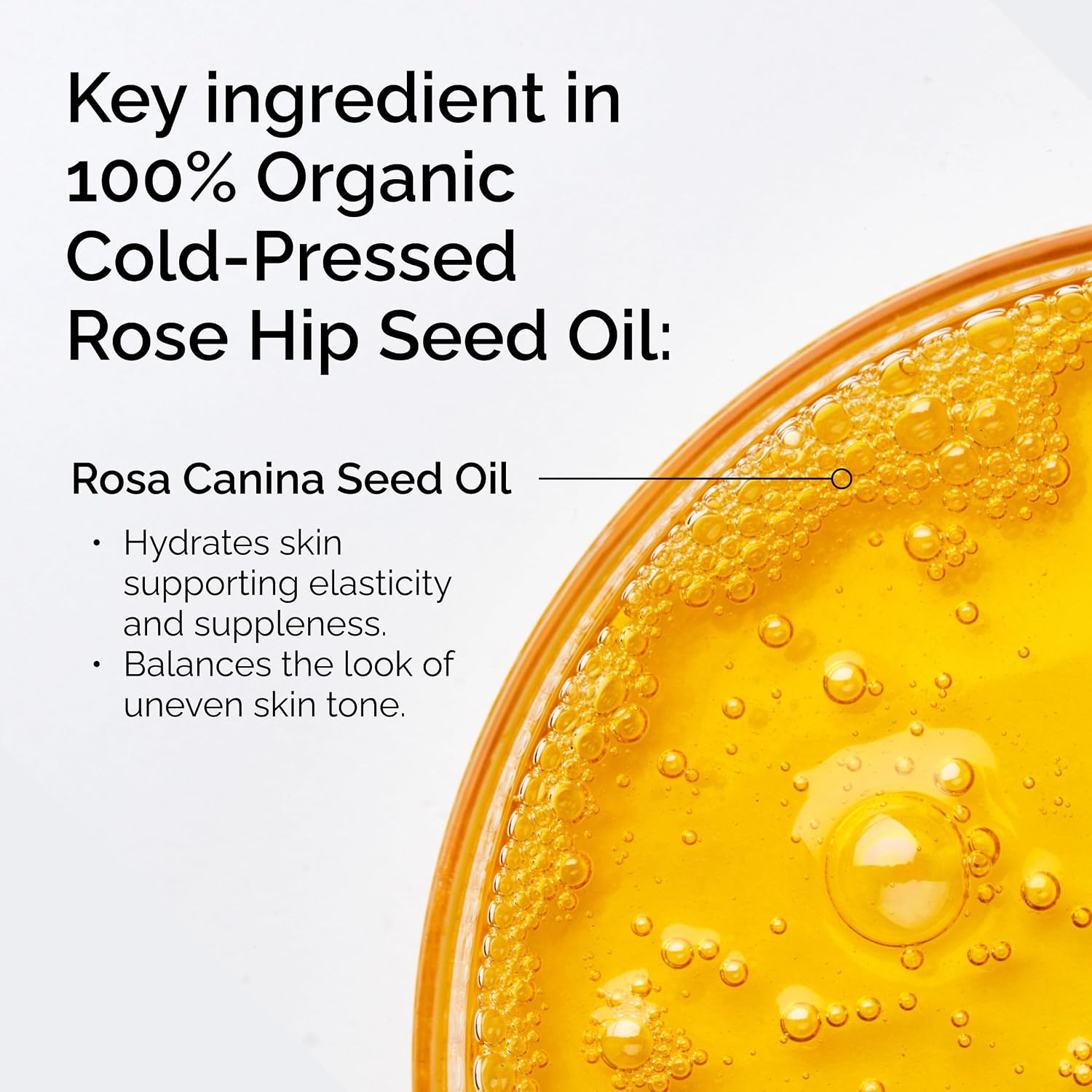
Cold-pressed (also: expeller-pressed): The oil was extracted mechanically, using pressure and friction, at temperatures low enough to preserve heat-sensitive compounds — primarily trans-retinoic acid (a naturally occurring form of vitamin A), tocopherols (vitamin E), and the high concentrations of linoleic acid (omega-6) and alpha-linolenic acid (omega-3) that give rosehip oil its skin-repair reputation. According to the INCIDecoder ingredient database entry for Rosa Canina Fruit Oil (incidecoder.com), cold-pressed versions are specifically noted for retaining the highest levels of these bioactive fatty acids and fat-soluble vitamins compared to heat- or solvent-processed alternatives.
Refined / RBD (Refined, Bleached, Deodorized): The oil was either solvent-extracted or mechanically extracted and then processed with heat, chemical solvents, or steam to remove color, odor, and impurities. The result is a more shelf-stable, lighter-colored product with a longer oxidation window — but with meaningfully lower concentrations of the bioactive compounds that justify the ingredient in the first place.
CO₂-extracted: A supercritical carbon dioxide extraction method that can preserve actives comparably to cold-press, sometimes better, at lower temperatures. Less common in mass-market products but appears in some premium formulations. The INCIDecoder ingredient database notes that CO₂ extracts are sometimes labeled with a (CO₂) qualifier and are considered high-integrity alternatives to cold-press.
The practical upshot: If a product’s label says only Rosa canina seed oil with no cold-press, no CO₂ qualifier, and no processing note anywhere on the packaging, the industry default is to assume refinement. Brands selling genuinely cold-pressed oil have a commercial incentive to say so. Absence of the claim is information.
The Tradeoff Matrix: Three Buyer Scenarios Compared
The framing most reviews skip: cold-pressed rosehip oil is not always the right choice, and treating refinement as automatically inferior is ingredient snobbery, not science. The right call depends on how fast you use the product, how you store it, and what skin goals you’re targeting.
Per the Skin Deep Cosmetics Database maintained by the Environmental Working Group (ewg.org), high-quality cold-pressed Rosa canina oils carry linoleic acid content in the range of 44–50% by weight. Refined versions typically fall in the 30–40% range, with further variation depending on processing intensity.
Byrdie’s updated 2025 roundup of the best rosehip oils specifically flags oxidation as a primary cause of poor performance: reviewers who experienced breakouts or increased irritation were frequently using oils past their oxidation window, or oils stored improperly in clear bottles on sunlit shelves. Oxidized polyunsaturated fats can trigger inflammatory responses in skin — the opposite of the intended result. (Source: Byrdie, “The Best Rosehip Oils, Tested and Reviewed,” updated 2025.)
The three scenarios below capture the most common purchasing contexts. Each ends with a tier recommendation.
H3: The Daily Active-User Scenario
You finish a 1 oz (30 mL) bottle within six to eight weeks. You use rosehip oil as a standalone facial oil — not buried in a 25-ingredient serum — and your goals are targeted brightening, post-inflammatory hyperpigmentation correction, or supporting cell turnover. According to Allure’s 2024 overview of rosehip oil benefits (Allure, “Everything You Need to Know About Rosehip Oil,” 2024), the brightening and skin-tone-evening effects of rosehip oil are tied specifically to its retinoic acid and heat-sensitive vitamin C content — both of which are reduced in refined versions.
In this scenario, the cold-pressed premium is justified. The high linoleic acid and transretinoic acid content are bioavailable, you’re finishing the bottle before significant oxidation occurs, and you’re paying for the compounds that produce the outcomes you want.
At three to four drops per application twice daily, a 30 mL bottle provides roughly 90 uses. A well-sourced cold-pressed rosehip oil in the $32–$42 range lands around $0.35–$0.47 per use.
 product image](/images/external/ab777a3db42c.jpg)
Trilogy
$31.79
In stock on Amazon
Check price on AmazonH3: The Occasional-Use or Shared-Bottle Scenario
You use rosehip oil two or three times per week, or you share a bottle with a partner, or you rotate it among several other facial oils and serums. Turnover is slow — you’re realistically looking at four to six months before a 30 mL bottle is finished. In this scenario, cold-pressed rosehip oil is working against you: its higher polyunsaturated fatty acid concentration oxidizes faster, and a bottle that’s been open for five months and stored at room temperature is likely delivering rancid lipids regardless of its extraction method origin.
A well-formulated refined rosehip oil — or a stabilized blend with added tocopherols — gives you a 12–18 month oxidation window after opening. The linoleic acid content is reduced but not absent. The barrier-support benefits remain meaningful.
For this use pattern, spending a premium on cold-pressed extraction is not well-matched to your actual consumption habits.
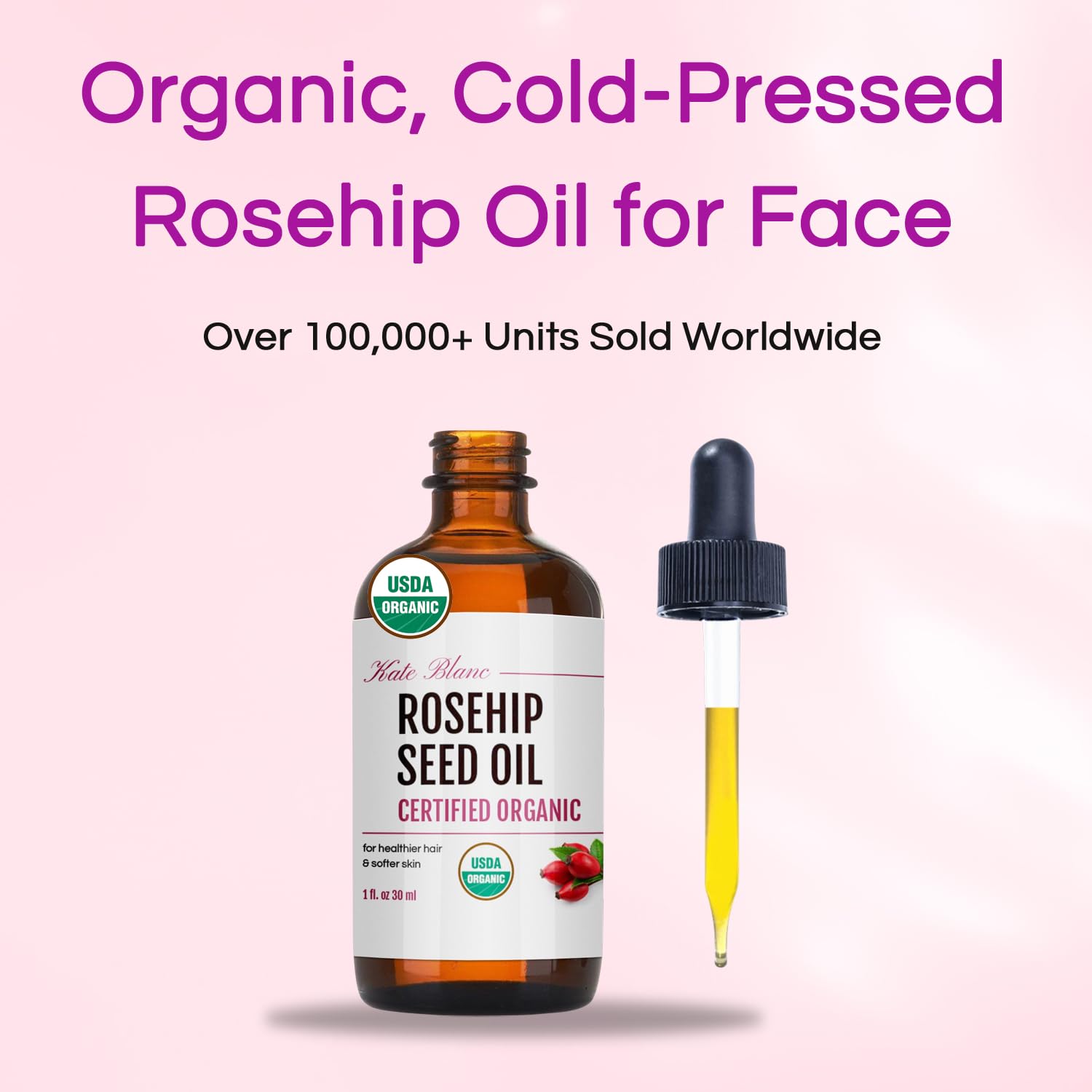
Kate
$9.99
In stock on Amazon
Check price on AmazonH3: The Formulated Serum Scenario
You’re not buying a standalone oil — you’re evaluating a serum, moisturizer, or treatment product in which rosehip oil appears alongside other actives (vitamin C derivatives, bakuchiol, hyaluronic acid, peptides). The extraction method still matters, but less than in a standalone oil, because the formulation context changes the stability equation. A well-built preservation and antioxidant system within a professional formulation can slow oxidation that a consumer-held bottle cannot.
In this scenario, evaluate the rosehip entry’s position on the INCI list first. Per the INCIDecoder ingredient database (incidecoder.com), a meaningful concentration of a carrier oil in a serum typically places it in the top half of the formulation — above the 1% threshold where ingredients can be listed in any order. If Rosa canina appears in the bottom third of a 25-ingredient serum, you’re paying for a trace amount regardless of extraction method.
If the oil is present at meaningful concentration and the brand publishes formulation transparency (sourcing notes, preservation rationale), cold-pressed in a well-formulated serum can deliver the brightest outcome at any price tier. If the oil is a trace ingredient and the brand is trading on the “cold-pressed rosehip” descriptor in marketing copy, that’s worth noting.
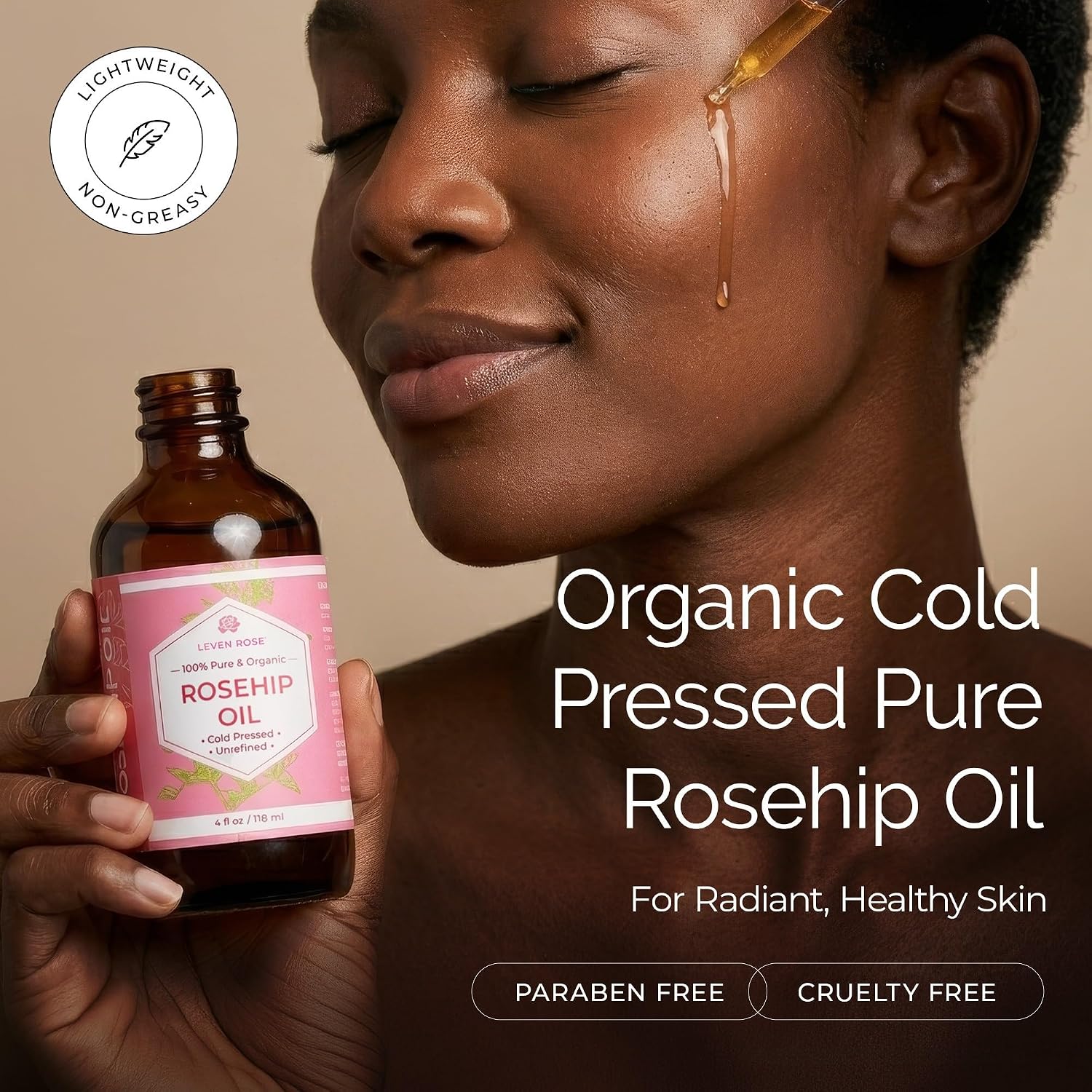
Leven
$15.97
In stock on Amazon
Check price on AmazonHow to Audit a Product in Two Minutes
Step 1: Find the INCI list. Required by FDA on all cosmetics in the US; required by the EU Cosmetics Regulation in Europe. On e-commerce pages, look for “full ingredients” or “INCI” tabs. If a brand obscures this, treat it as a signal.
Step 2: Locate the rosehip entry. Common INCI names include Rosa canina fruit oil, Rosa canina seed oil, Rosa rubiginosa seed oil (a different rosehip species, also well-studied), and Rosa moschata seed oil. All are legitimate. Per the INCIDecoder ingredient database, Rosa rubiginosa and Rosa moschata are frequently cited alongside Rosa canina in dermatology-adjacent literature for high retinoic acid concentrations.
Step 3: Look for the extraction qualifier. Cold-pressed, expeller-pressed, CO₂, or unrefined. If it’s not on the label, check the brand’s website ingredient philosophy or sourcing pages. Some brands publish detailed sourcing notes. If no qualifier appears anywhere in brand materials, assume refined and price accordingly.
Step 4: Check position in the formula. INCI lists are ordered by concentration, highest to lowest, down to 1% — below 1%, ingredients can appear in any order. A rosehip oil in the bottom third of a long INCI list is present at trace levels.
Step 5: Run the cost-per-use. A 1 oz cold-pressed standalone oil used daily at 3–4 drops per application runs approximately 90 uses before hitting the recommended oxidation window. A $38 bottle is approximately $0.42 per use. A $90 multi-active serum containing cold-pressed rosehip might run 60 uses at $1.50 per use — but you’re paying for stabilized delivery of additional actives, not the oil alone. That math can be defensible depending on your routine and goals.
The Practitioner Decision Rule
If you’re recommending or purchasing rosehip oil for clients, stocking it for retail, or building it into a treatment protocol, here is the clean framework:
Targeted brightening, post-inflammatory hyperpigmentation, or cell-turnover support → cold-pressed or CO₂-extracted only. The transretinoic acid and tocopherol content that drives those outcomes degrades in refinement. Counsel clients on the three-to-six-month oxidation window and recommend refrigeration for those who won’t use the product daily.
Barrier support, dry-skin moisturization, or lightweight oil phase in a layered routine → refined is defensible, particularly when cost-per-use matters or the client has a slow usage rate. The linoleic acid content, even reduced by processing, supports barrier function meaningfully.
Formulated serum or moisturizer containing rosehip → evaluate the formulation holistically. Formulation philosophy and manufacturing transparency from the brand matter more than extraction method in isolation when the product includes a full preservation system.
No extraction qualifier on label or brand materials → treat as refined, price it accordingly, and do not pay a cold-pressed premium.
The single most consistent finding across the aggregated reviewer data in Byrdie’s rosehip oil roundup (Byrdie, “The Best Rosehip Oils, Tested and Reviewed,” updated 2025) and the product profiles in the Environmental Working Group’s Skin Deep database (ewg.org) is this: storage and oxidation management are the biggest predictors of rosehip oil performance in real-world use, more than extraction method alone. A pristine cold-pressed oil stored in a clear bottle on a warm bathroom shelf will underperform a decent refined oil stored dark and cool. The extraction method sets the ceiling. Your storage habits — and honest assessment of your usage rate — determine where you land within it.
Read the label. Run the math. Match the method to the goal.